A milkmaid reads The Castle of Otranto
Among gifts of Ovid, Virgil, Milton, and Dryden, philanthropist and writer Hannah More gave her protégé and beneficiary Ann Yearsley a copy of the Gothic novel The Castle of Otranto. Ann Yearsley was a self-taught poet, born to a poor family in Bristol, who worked as a milkmaid. She was active as a poet primarily in the 1780s and 1790s, publishing her first collection, Poems on Several Occasions, in 1785. Hanna More, her patron, was an industrious Evangelical reformer who ‘discovered’ Yearsley.
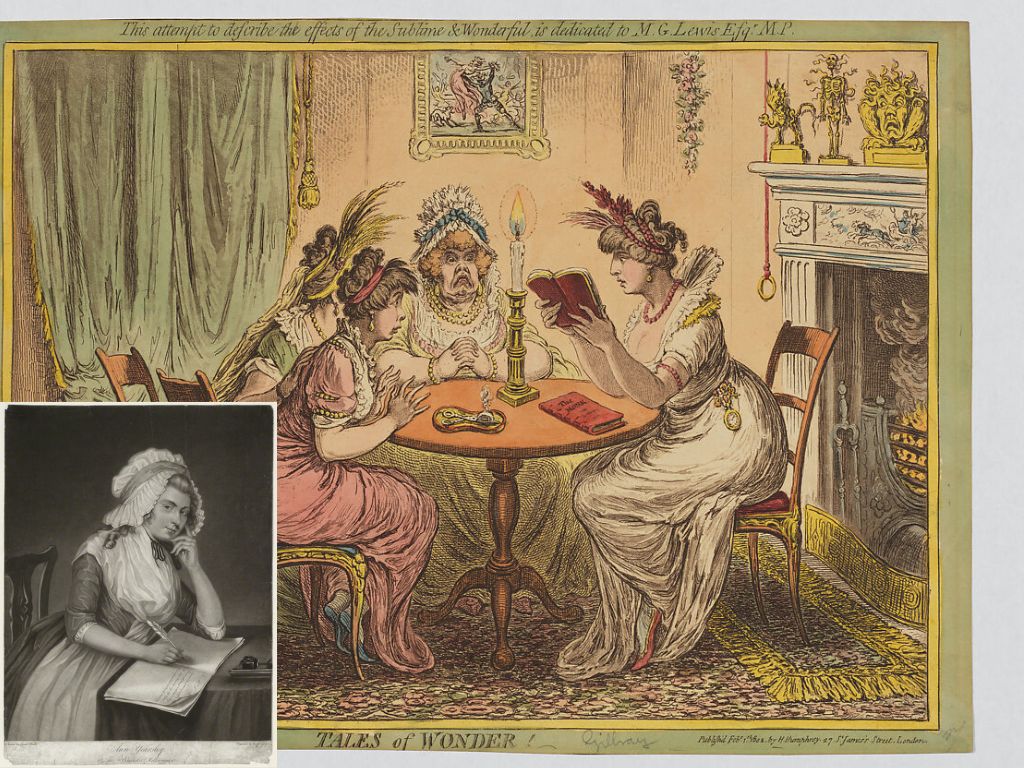
While Miltonic and classical influences are well apparent in Yearsley’s work, traces of novel reading are few and far between. This is probably not because Yearsley did not read novels, but because novels were perceived as potentially dangerous, particularly for the working class and women. It could be distracting, taking up valuable work time, or instilling ideas of excitement and ‘true’ love in girls’ minds. But Yearsley did at least read Otranto. We know because of her long poem: “TO THE Honourable Horace Walpole, ON READING The CASTLE of OTRANTO.”
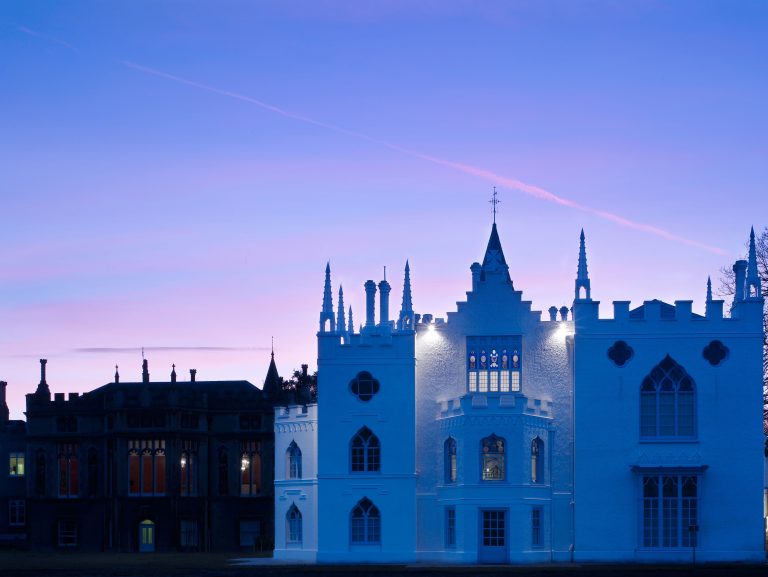
This poem is partly a response to the novel and partly a tongue-in-cheek tribute to the author Horace Walpole (1717–1797). Walpole, as you might know, was the owner of Strawberry Hill in Twickenham. The neo-Gothic mansion reflected his fascination with medieval art and architecture. This interest is also evident in Otranto, subtitled a “Gothic Story.” The novel tells the tale of Manfred, a tyrannical prince who becomes obsessed with ensuring his dynasty’s survival after his son, Conrad, is killed (by a giant helmet falling from the sky).
With the publication of Otranto, Walpole had essentially invented a whole new genre: the precursor to the ghost-filled, haunted Gothic novels of today.
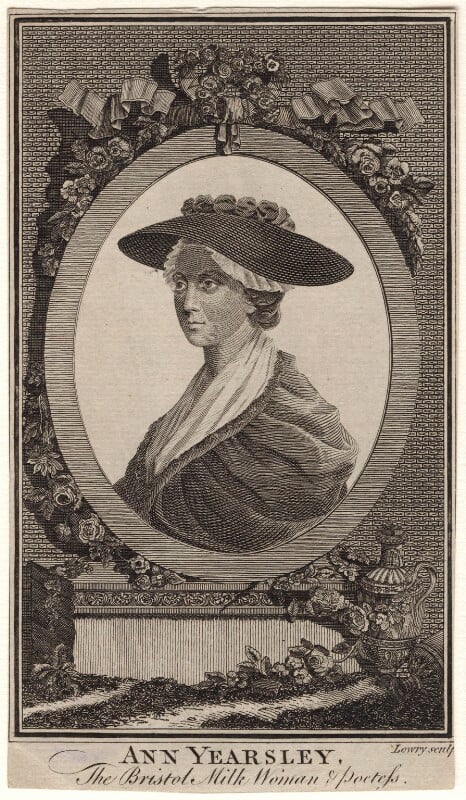
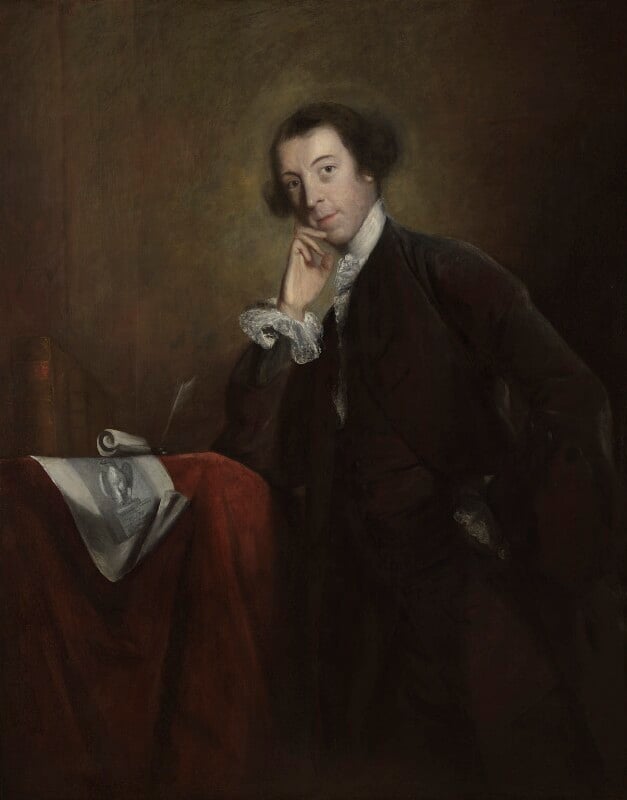
In her poem, Yearsley details the response of a working-class woman to a Gothic novel, playing with the expectations towards such a reader. Yeasley knew very well what the upper and middle classes thought about the reading comprehension skills of people like her. We can confirm her suspicion, as Walpole had written to Hannah More, reproaching her for
“putting into this poor woman’s hand such a frantic thing as the Castle of Otranto […] you will have made a hurly burly of this poor woman’s head, which it cannot develop and digest.”1
Here, Walpole describes the common expectation that working-class women would be swept away by reading a Gothic novel, unable to distinguish truth from fiction. However, as I want to show here, Yearsley demonstrates in her poem that she is a subtle reader who exceeds Walpole’s expectations. Yearsley essentially adopts the Gothic tensions of Otranto to comment on her own place in the hierarchy of literary patronage and the ladder of social privilege.
Bianca talks back
In the poem, Yearsley adopts the role of one of Walpole’s characters, Bianca. Bianca is a servant in the novel who constantly annoys Manfred with her prattle and is terrified of the supernatural. Bianca is, at first glance, a fitting identity for Yearsley, a servant who exhibits stereotypical characteristics associated with their shared gender and class background. The first verse of the poem plays into this stereotype, professing that Bianca is indeed the chattering, gossiping female servant that Walpole had portrayed:
To praise thee, Walpole, asks a pen divine,
And common sense to me is hardly given,
Bianca’s Pen now owns the daring line,
And who expects her muse should drop from Heaven.
My fluttering tongue, light, ever veering round,
On Wisdom’s narrow point has never fix’d;
I dearly love to hear the ceaseless sound,
Where Noise and Nonsense are completely mix’d. (l. 1 – 8)
Bianca starts off by praising Walpole and contrasting his skill to her own nonsensical noise. However, few would see these lines, contained within alternative rhyming quatrains, as nonsense. This Bianca does not speak like the motor-mouth of The Castle of Otranto. Then it is the praising of Walpole himself. The fact that the lowly Bianca is tasked with praising Walpole gives the flattery a mocking edge; the not-so-heavenly muse (who expects her to drop from heaven?) both humbles the speaker and diminishes the value of the admiration. If the praise comes from a servant, how good can you really be?
Bianca continues on this note: as she adopts a skilful poetic tone while professing she only mixes “Noise and Nonsense”, she points out that such inconsistencies can go both ways:
The empty tattle, true to female rules,
In which thy happier talents ne’er appear,
Is mine, nor mine alone, for mimic fools,
Who boast thy sex, Bianca’s foibles wear.
Supreme in prate shall woman ever sit,
While Wisdom smiles to hear the senseless squall;
Nature, who gave me tongue, deny’d me wit,
Folly I worship, and she claims me all (9-16)
Bianca, in what might be termed a backhanded compliment, says Walpole never applies his “happier talents” to write female characters like her. In fact, Walpole is actually guilty of the same type of prattle in his “channelling” of a supposedly female and working-class trait. The agreement that women are “supreme in prattle”, therefore, comes across as a muted or ironic endorsement of Walpole’s misogyny. After all, who actually makes Bianca talk (Bianca’s foibles wear) is the upper-class male author. So far, Yearsley has criticised both Bianca’s characterisation and the assumption that these fictional working-class characters somehow mirror real life.
Bianca amongst the ghosts
Bianca moves on from her own character to actually enjoy the scary ghosts and ghouls of Otranto: At first glance, this is the expected reaction of an artless ‘gullible’ reader:
Thy jawless skeleton of Joppa’s wood
Stares in my face, and frights my mental eye;
Not stiffen’d worse the love-sick Frederic stood,
When the dim spectre shriek’d the dismal cry.
But whilst the Hermit does my soul affright,
Love dies — Lo! in yon corner down he kneels;
I shudder, see the taper sinks in night,
He rises, and his fleshless form reveals. (69 – 76)
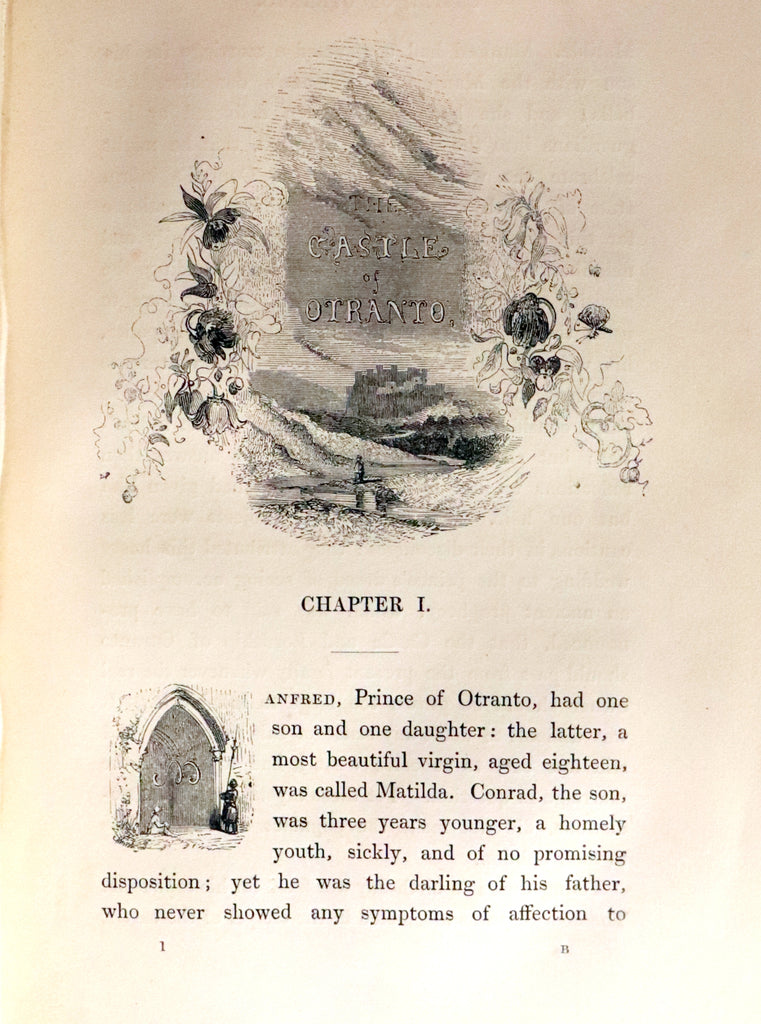
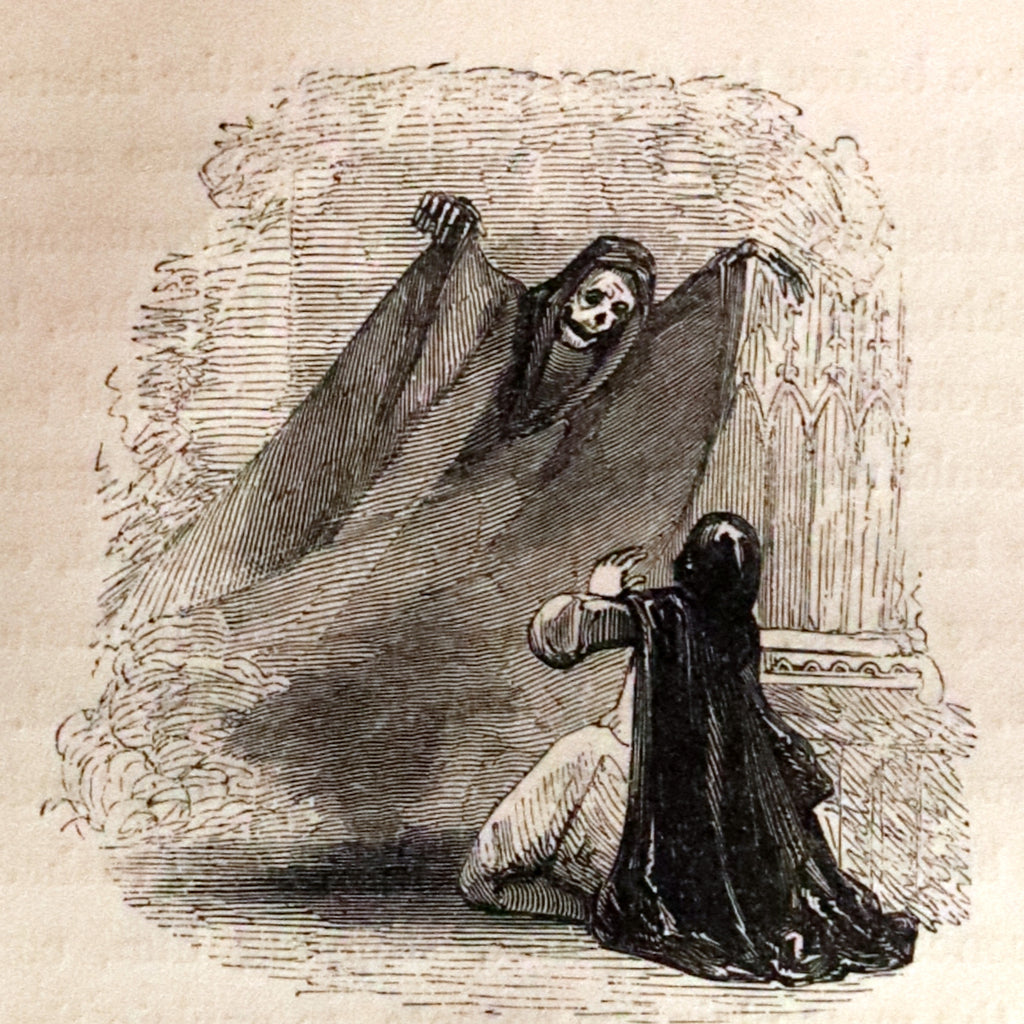
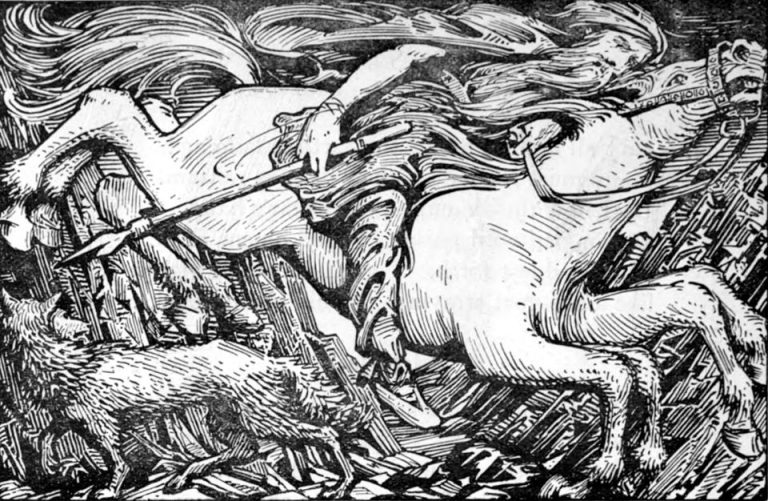
Illustrations from the 1840 edition of Otranto and the skeleton that temporarily frightens Yearsley’s Bianca,
But the speaker is not overpowered by the novel’s horrific elements, and the subsequent verses offer a keen analysis of the novel’s central characters. Yearsley pays special attention to the female characters in the novel, commenting on the sexist tropes and the way women are persecuted and harmed in the Gothic novels, tropes that only recently have started to be dissected in the horror genre today:
Implicit Faith, all hail! Imperial man
Exacts submission; reason we resign;
Against our senses we adopt the plan
Which Reverence, Fear, and Folly think divine.
But be it so, Bianca ne’er shall prate,
Nor Isabella’s equal powers reveal;
You Manfreds boast your power, and prize your state;
We ladies our omnipotence conceal. (53 – 60)
Here, Yearsley laments the seemingly inevitable effects of patriarchal power and notes its constructed nature: while faith is “implicit,” it is really “imperial man” who demands submission. In fact, this submission is against “our sense.”
The speaker commits Bianca to keeping Manfred’s lack of power a secret. Manfred and men like him “boast [their] power,” revelling in their status, while women, like the heroine of the novel, Isabella, are forced to conceal their “omnipotence.” This concealment is mirrored in the poem itself, as Yearsley hints at her true opinion and talent throughout her mock-celebratory verses.
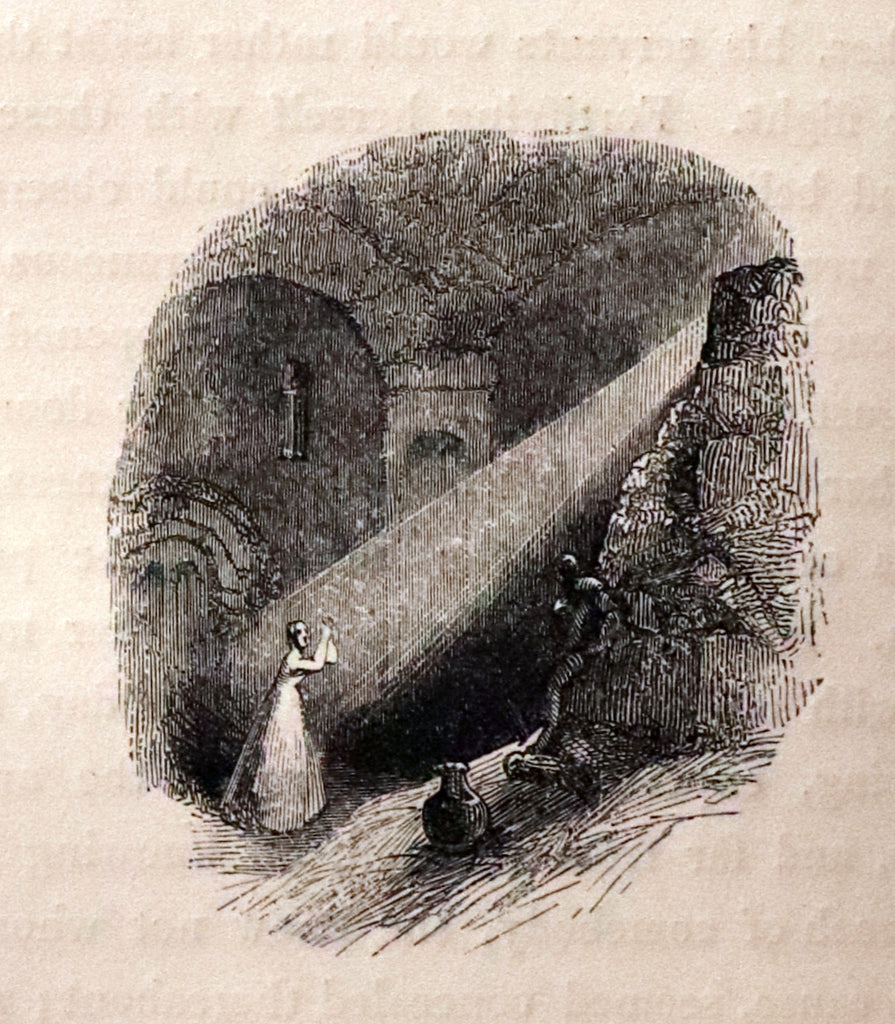
However, as soon as the criticism seems to solidify, the speaker pivots back to praising Walpole and to the escapism of his Gothic novel.
But, Oh! then strange-inventing Walpole, guide,
Ah! guide me thro’ thy subterranean isles,
Ope the trap-door where all thy powers reside,
And mimic Fancy real woe beguiles. (61 – 65)
As the speaker descends down the trap door of Otranto Castle, we see perhaps the true value of the novel to Yearsley. It is the escapism of reading: ‘real woe‘ is forgotten for a moment. This, of course, simultaneously reveals that she is very aware of the difference between fiction and reality. The feelings that a gothic story inspires are easily digested, contrary to Walpole’s expectations. But, now almost at the end of the poem, the speaker shifts again to actual real-life relationships. Yearsley drags Walpole and Hannah More into the commentary. The speaker in the poem seems to fear that Walpole’s powers as a gothic author will hurt ‘Stella’ (what Yearsley called More) and herself in their real life:
Stella! if Walpole’s spectres thus can scare,
Then near that great Magician’s walls ne’er tread,
He’ll surely conjure many a spirit there,
Till, fear-struck, thou art number’d with the dead.
Oh! with this noble Sorcerer ne’er converse;
Fly, Stella, quickly from the magic storm;
Or, soon he’ll close thee in some high-plum’d hearse,
Then raise another Angel in thy form. (81 – 88)
Stella/More seems to be just as susceptible to the damaging emotions that Gothic writing can bring, even as she has a more privileged position than Bianca/Yearsley due to her class background. Stella/More seems to be in danger of being used by Walpole, as easily replaceable by another “Angel”. In the next verses, Bianca/Yearsley suddenly questions how this would affect her own life and writing:
But is Bianca safe in this slow vale?
For should his Goblins stretch their dusky wing,
Would they not bruise me for the saucy tale,
Would they not pinch me for the truths I sing?
Yet whisper not I’ve call’d him names, I fear
His Ariel would my hapless sprite torment,
He’d cramp my bones, and all my sinews tear,
Should Stella blab the secret I’d prevent. (93 – 100)
The speaker speculates that Walpole will punish her for her “saucy tale” if Stella/More blabs on her. The tone moves from playful, she will only be pinched for the truths she sings, to gruesome: “He’d cramp my bones, and all my sinews tear.”
The speaker fears for the violence found in Otranto while also showing that Yearsley can write some pretty Gothic lines herself. She imagines that Stella takes the place of the hapless and virtuous heroine, Walpole both the supernatural threat through his skill as a writer and the pursuing evil patriarch, and finally, the speaker remains in her Bianca-like role of being used and punished by her social betters.
Luckily, for Bianca/Yearsley, the threat of Walpole seems to be partly contained in the literary universe of Otranto, and the danger passes as the reader falls asleep:
But hush, ye winds, ye crickets chirp no more,
I’ll shrink to bed, nor these sad omens hear;
An hideous rustling shakes the lattic’d door,
His spirits hover in the sightless air.
Now, Morpheus, shut each entrance of my mind,
Sink, sink, Otranto, in this vacant hour;
To thee, Oh, balmy God! I’m all resign’d,
To thee e’en Walpole’s wand resigns its power. (101 – 108)
The antidote to the frightening images from Otranto is to simply stop reading and go to bed. What stays with us is maybe the social relations Otranto is built on, and Yearsley’s weaving of her real experience and fiction. Still, that enjoying a book and then going to sleep is the resolution to the poem, is a very decisive final word on the supposed influence the novel would have on Yearsley’s “hurly burly mind”.
Bibliography:
Walpole, Horace. “Horace Walpole to Hannah More, Saturday, 13 November 1784.” In Horace Walpole’s Correspondence, Vol. 31, edited by W. S. Lewis, 221. New Haven: Yale University Press, 1961.
Yearsley, Ann. “To the Honourable H—e W—e, on Reading The Castle of Otranto, December, 1784.” Eighteenth-Century Poetry Archive, July 4, 2024.
- Walpole’s Correspondence, 221. ↩︎